When it comes to finances, I subscribe to the idea that automation is how to make it easy to stay on top of things. I just don’t have the will to track every expense or go through account statements.
Over time, I have fine-tuned a system that I find makes it really easy for me to stay on top of things without thinking, avoiding my expenses ballooning or me wondering at the end of the month where all the money went.
The main ideas are:
- Use a joint account for joint expenses, and joint expenses only
- Pay myself a monthly allowance for everyday spending
- Automated, simple investments
- Save for big expenses
- Give a little bit to charity
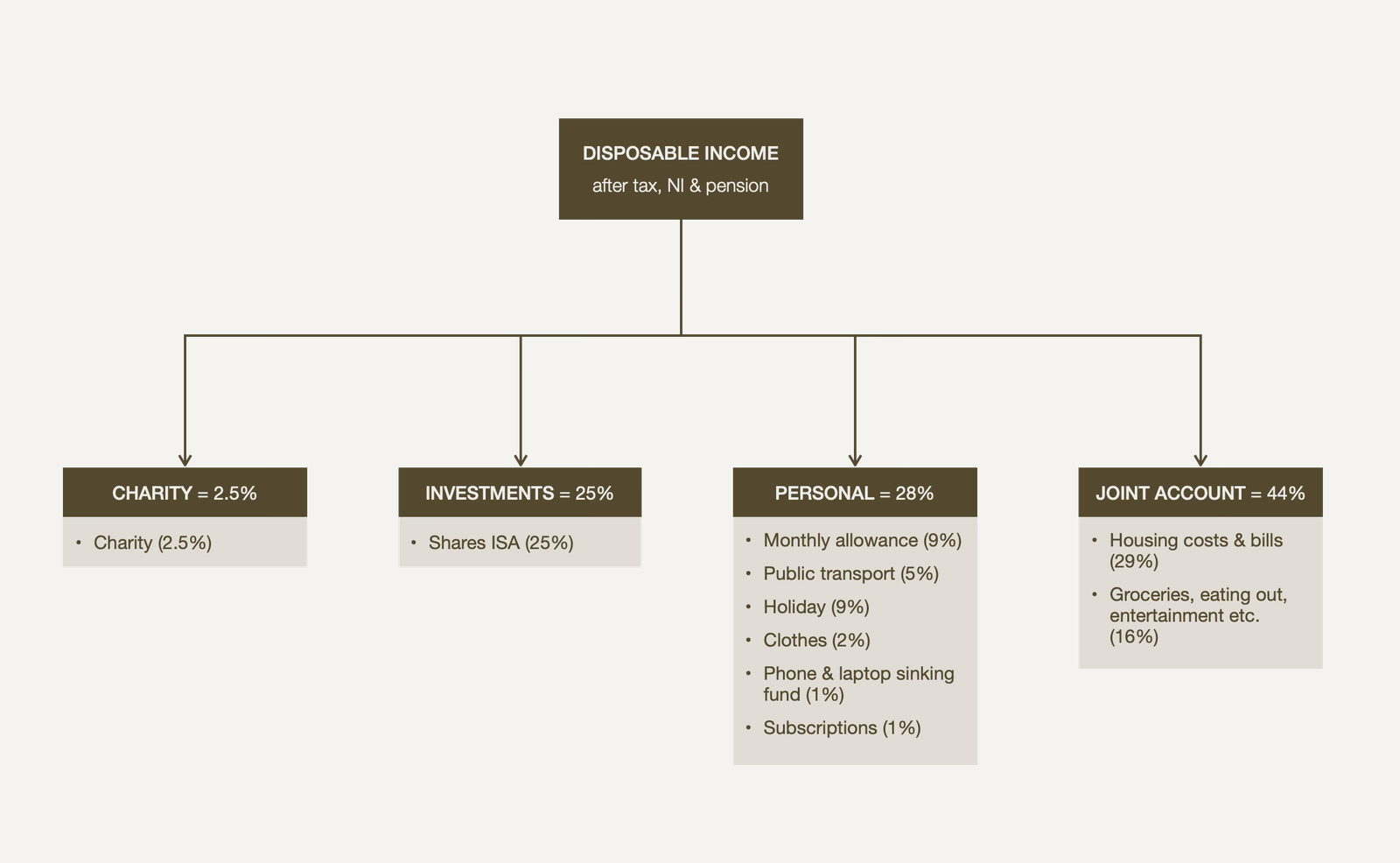
Use a joint account for joint expenses, and joint expenses only
My husband and I both transfer a fixed amount into a joint account each month, which covers all our shared bills, plus our other spending during the month, like groceries, eating out, drinks, exhibitions, etc. It saves us from having to keep track of who’s paying for what, as all shared expenses go out from one account. And likewise, by keeping the rest separate, neither of us need to care how the other spends their remaining money.
Pay myself a monthly allowance for everyday spending
I transfer a fixed amount each month into a spending account with a connected debit card for all my personal everyday expenses, like lunch, coffee and little day-to-day purchases like stationery and so on. It’s a very effective way for me to stop myself from overspending without realising, and it enforces a simple “if I spend money on x, I can’t y this month”. Plus, I get to feel good if I still have a little bit left at the end of the month I can set aside for something fun.
Automated, simple investments
I have a standing order to invest 25% of my take-home pay in a global index fund in my tax-free ISA. By paying the same amount every month into a broad fund, I don’t need to care whether the market goes up or down or what the value is right now. On average, over time, there should be an ok return.
Save for big expenses
Phones are seriously expensive these days, and then there are laptops, holidays, bank fees and whatnot. To make sure I always have money for things when I need them, I have a separate “sinking fund” for every big purchase, setting aside a fixed, precise amount each month based on the cost and when I will need it, so that when it’s time, the money is already sitting there in the bank waiting.
Give a little bit to charity
I give 2.5% to charity each month, which is the equivalent of one working hour per week. It’s not much, and one could easily argue that it’s more an egoistic act than a generous one: doing something helps me feel a bit less guilty when there is so much misery around.
